Provide Top Industrial Chemicals to Customers All Over the World
Provide Top Industrial Chemicals to Customers All Over the World

1.Q: What is Rock-Type Composite Oil Phase?
A:Rock-type composite oil phase is not an independent chemical substance classification. It refers to a composite oil phase specifically used for “rock-type” industrial explosives. “Rock-type” defines the application of the explosive, while the composite oil phase is a key component adapted to that application.
2.Q:What is Core Meaning and Characteristics of “Rock-Type Composite Oil Phase”?
A:When a composite oil phase is labeled “rock-type”, it means its formulation is designed to meet the core requirements of rock-blasting explosives for work capacity (power) and detonation stability.
Its specific characteristics vary depending on the explosive product it serves, rather than being a fixed set of indicators.Serving rock emulsion explosives is the most common scenario. As the continuous phase, the performance of the composite oil phase directly affects the detonation performance, sympathetic detonation distance, and storage stability of the emulsion matrix.In such applications, the process indicators of the composite oil phase are set around the emulsification process.

3.Q:What Are the Appearance and Odor of Rock-Type Composite Oil Phase?
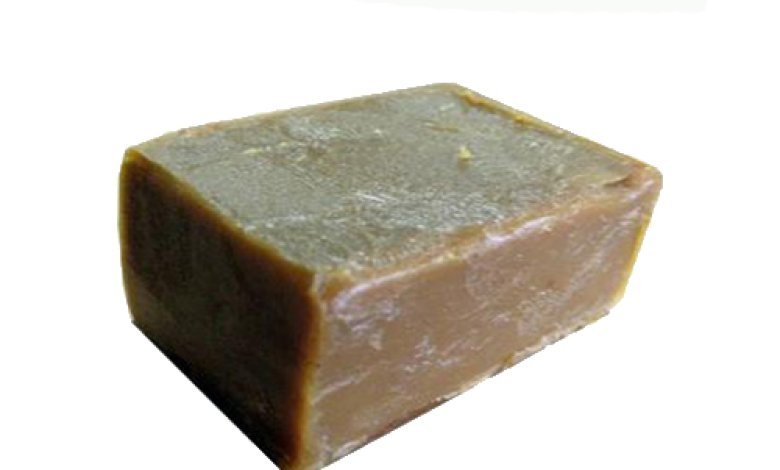
A:Appearance mainly depends on its physical state at room temperature. Common types include:Hard paste at room temperature.
This is a common form in emulsion explosives, convenient for transport and storage, and requiring heating and melting before use.
High-temperature-sensitization type: usually a yellow-brown homogeneous hard paste.
Medium- and low-temperature-sensitization type: commonly a dark brown to light yellow homogeneous hard paste.
General description: some products are described as a dark brown to light yellow homogeneous hard paste.
In conclusion,Brown Blocky solid,Weak odor.